“The light in the ice” transforms an iconic bottle into a sculptural object, frozen in a clear, crystalline atmosphere. Shaped with broncolor light sources and high-precision light shapers, a pure beam of light penetrates the glass, revealing textures, reflections, and contours with millimetre-accurate control. Every highlight is deliberately placed - from the engraving to the luminous edge emerging from the ice like a symbol of quality and perfection.
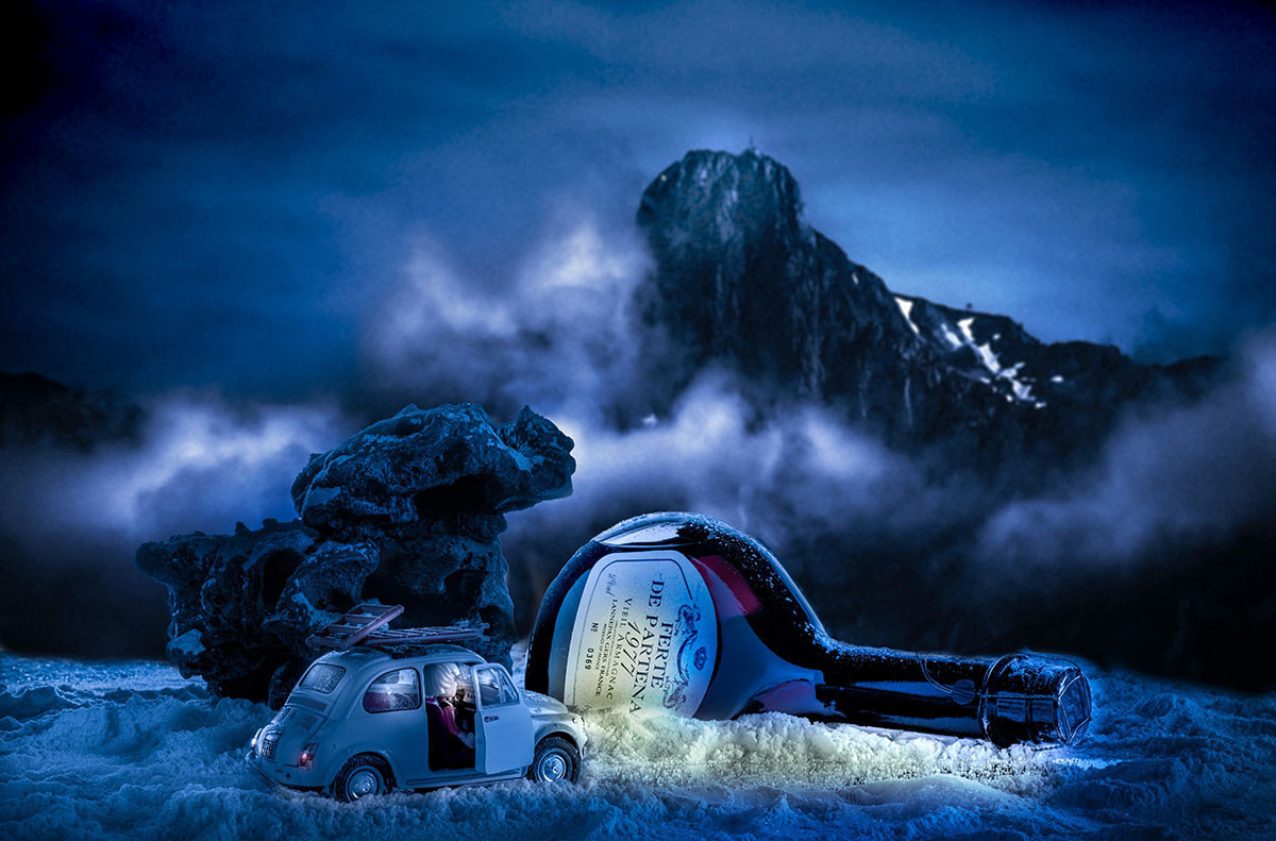
To create this silent winter scene, I used simple materials and a carefully planned lighting setup designed to evoke genuine cold and natural depth. A wine bottle and a Fiat 500 model were arranged into a small landscape tableau, with a ground made from a mixture of flour and sugar. The flour provided a soft, matte snow texture, while the sugar crystals produced pinpoint reflections reminiscent of frozen ice. The entire structure rested on a mirror, generating realistic, slightly blurred reflections that gave the image its frosty character. Small reflectors were used to subtly reduce shadows and bring the miniature set into a harmonious balance.
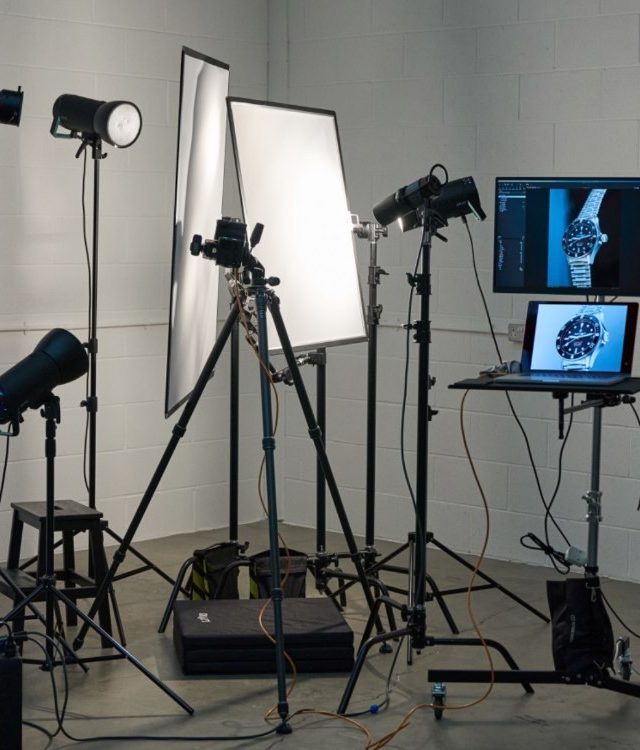
Light formed the centerpiece of this staging. A broncolor Move 1200 L equipped with MobiLed heads behind a diffuser created an even, soft backlight that separated the scene from the background, illuminated the “snow surfaces,” and defined the bottle’s contour - also serving as the perfect foundation to later insert a mountain landscape from the Bernese Oberland cleanly. The Senso 2400 served as the stable main system, while a compact head with a projection attachment highlighted the labels and glass details with a narrow, controlled beam. A small softbox on the right provided gentle fill light and added delicate reflections along the improvised “road,” while a simple reflector panel slightly lifted the shadows behind the Fiat 500.
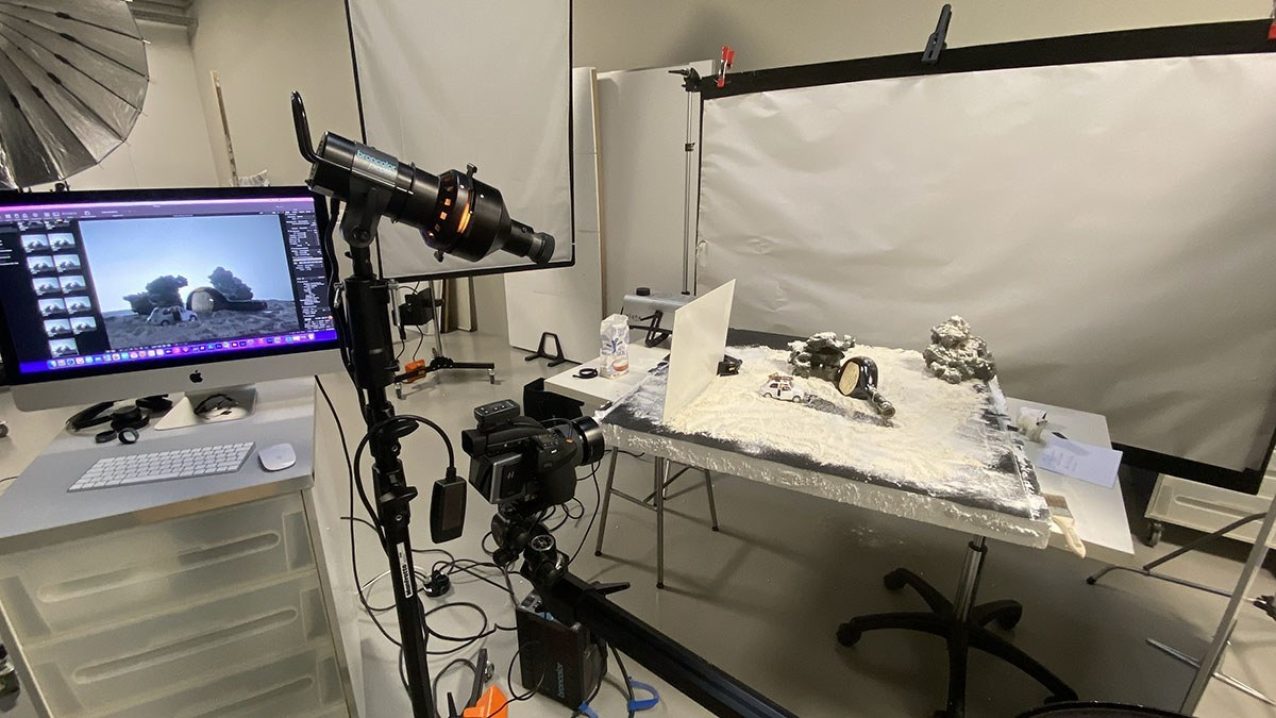
The scene was captured with a Hasselblad H6D-100c and an HC 80 mm lens, from a camera-height perspective near the minimum focusing distance. Focus stacking ensured razor-sharp detail throughout the entire set, and the shot was triggered remotely via Phocus to avoid vibrations.
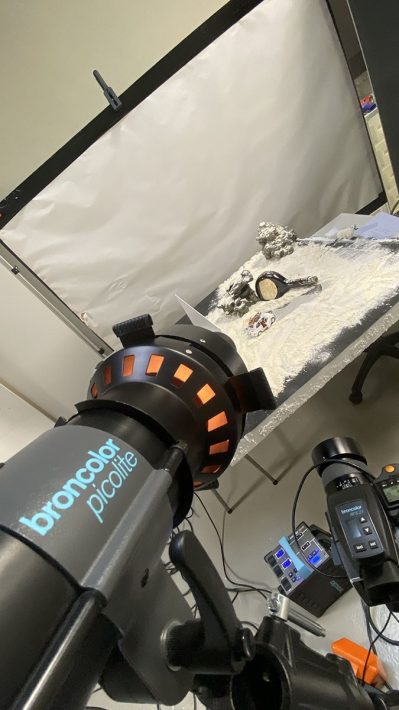
Post-processing took place in Adobe Camera Raw, where color corrections, micro-contrast adjustments, and fine-tuning of reflections were applied. The mirror surface was cleaned without losing its icy character. The result is an elegant, advertising-ready image in which the bottle not only becomes the focal point but turns into a desirable object whose essence is fully revealed through light.